
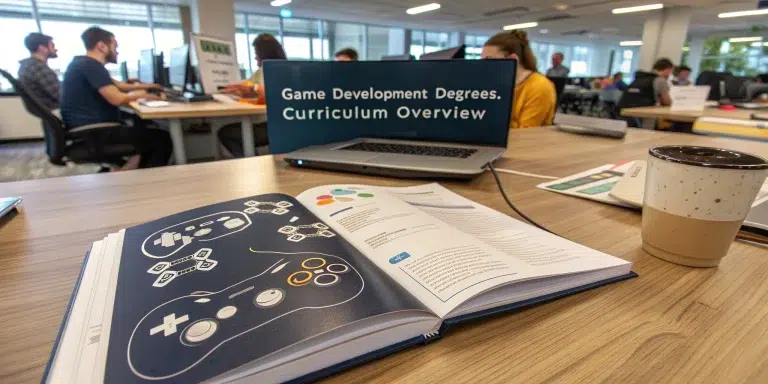
Game Development Degrees: Curriculum Explained
What is a Game Development Degree?
A game development degree is a specialized program that focuses on the art and science of creating video games. This multidisciplinary field encompasses a range of topics, including game design, programming, art, and sound, providing a well-rounded education that prepares students for a variety of roles in the industry. Game development programs are typically offered at the undergraduate level, culminating in a Bachelor’s degree, though some institutions may offer advanced degrees as well.
What Do You Study in Game Development?
Game development curricula incorporate a blend of theoretical knowledge and practical skills, ensuring that students are well-equipped to tackle the complexities of the industry. Below is a breakdown of what students can expect to study:
Core Subjects
- Game Design Principles: This foundational course introduces students to core concepts such as narrative storytelling, character design, game mechanics, and playtesting methods.
- Programming & Technical Skills: Students will delve into programming languages essential for game development, such as C++, C#, and Java.
- Game Development Pipelines: This segment covers the stages of game development, from pre-production to post-release support.
- Animation & Visual Studies: Emphasizing the artistic side of game development, this course covers 2D and 3D modeling, animation techniques, and visual effects creation.
- Project-Based Learning: Many programs emphasize hands-on experience through team-oriented projects.
- Usability & Market Analysis: This course focuses on understanding player demographics and preferences.
- General Education Courses: In addition to specialized courses, students will typically complete general education requirements.
Elective Courses
- Mobile Game Development
- Augmented and Virtual Reality
- Advanced Game Design
- Sound Design for Games
- Game Localization and Globalization
Example Curriculum Components (Representative, Not Exhaustive)
| Area | Sample Courses |
|---|---|
| Programming | Game Development Foundations, Scripting, C++, C#, Java |
| Game Design | Game Theory, Gameplay Mechanics, Narrative Design |
| Visual & Animation | Character Animation, 3D Modeling, Concept Art |
| Production & Pipeline | Game Production Management, Collaborative Design |
| Tools & Engines | Unreal Engine, Unity, Game Art Software |
| Math & Cybernetics | Algebra, Computational Mathematics |
| Business & Usability | Market Analysis, Usability Studies |
Careers After Game Development
Graduates of game development programs are well-prepared for a variety of roles in the gaming and technology sectors. Career options include:
- Game Designer
- Game Programmer/Developer
- Animator or Game Artist
- Game Producer or Project Manager
- Level Designer
- Quality Assurance (QA) Tester
- Technical Artist
- UI/UX Designer
Expected Salary Ranges
Salaries for game development professionals can vary widely by role, experience, and location. Below are average salary ranges globally, converted to both USD and EUR:
- Game Designer: $50,000 – $90,000 (EUR 45,000 – EUR 80,000)
- Game Programmer: $55,000 – $120,000 (EUR 50,000 – EUR 110,000)
- Animator/Game Artist: $50,000 – $85,000 (EUR 45,000 – EUR 75,000)
- Game Producer: $60,000 – $120,000 (EUR 55,000 – EUR 110,000)
- Level Designer: $50,000 – $85,000 (EUR 45,000 – EUR 75,000)
- QA Tester: $35,000 – $60,000 (EUR 30,000 – EUR 55,000)
- UI/UX Designer: $60,000 – $100,000 (EUR 55,000 – EUR 90,000)
Is Game Development Hard to Study?
Studying game development presents its challenges, but it can be immensely rewarding for those with passion and determination. Some common difficulties students may encounter include:
- Technical Proficiency: Mastering programming languages can be daunting, particularly for students without a strong technical background.
- Time Management: Balancing coursework with project deadlines can be overwhelming.
- Critical Feedback: Students must be prepared for constructive criticism, which is essential for growth.
- Creative Blocks: Developing innovative game concepts may require brainstorming and creativity.
Preparation Tips
- Pre-Study Coding: Familiarize yourself with basic programming concepts.
- Participate in Game Jams: Engage in game development competitions.
- Build a Portfolio: Document your projects throughout your studies.
Top Certifications After Game Development Graduation
Upon graduation, aspiring game developers may consider obtaining certifications to enhance their job prospects:
- Unity Certified Developer: Recognized for proficiency in using Unity for game development.
- Unreal Engine Certification: Demonstrates expertise in using Unreal Engine for game design and development.
- Certified ScrumMaster (CSM): Valuable for those interested in project management in game production.
- CompTIA A+ and Network+: Useful for roles involving technical support in gaming environments.
Where to Study Game Development
Several top private universities offer comprehensive degrees in game development. Here are a few options:
For personalized assistance and expert guidance in selecting the right institution for your game development studies, reach out to Study in Turkiye. Our team is here to help you make informed decisions about your academic journey.
Take the Next Step with Study in Turkiye
Explore further and start your journey in game development today.

