
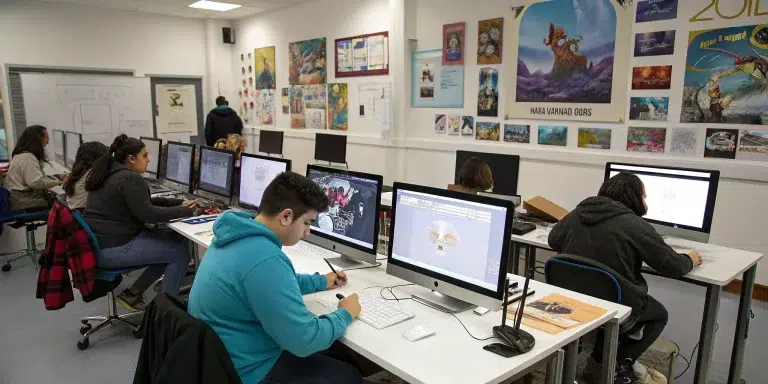
Overview of Animation Programs
What Do You Study in Animation?
Careers After Animation
Is Animation Hard to Study?
Top Certifications After Animation Graduation
Where to Study Animation
What is Animation?
Animation is a form of visual art that involves creating moving images through the manipulation of drawings, puppets, or digital models. With applications spanning film, television, gaming, and the internet, animation combines creativity with technology, transforming static images into engaging narratives that entertain and educate.
What Do You Study in Animation?
Core Curriculum Components:
- Principles of Animation: Students are introduced to fundamental animation principles such as timing, movement, weight, squash and stretch, anticipation, and the walk cycle, serving as the building blocks of animation filmmaking.
- Drawing Skills: Emphasis is placed on drawing for animation, covering anatomy, gesture drawing, perspective, observation, line, space, and texture. Students learn to use various traditional materials, including pencil and watercolor, to develop their drawing proficiency.
- Storyboarding & Visual Storytelling: This coursework focuses on storyboarding, character design, and creating visual narratives that effectively communicate ideas and emotions to a wide audience.
- 3D Animation & Digital Techniques: Students gain experience in 3D modeling, sculpting, and rendering, using industry-standard software like Maya and Blender. Techniques range from hand-drawn animation to digital puppet animation.
- Production Process: Instruction includes scripting, designing, directing, and producing short animated films, encouraging both individual projects and collaborative teamwork in simulated production environments.
- Backgrounds & Lighting: This area explores how to create visually appealing backgrounds and understand lighting effects in animation, using both traditional methods and digital tools.
- Professional Practice: Programs often incorporate professional development and critiques, preparing students for internships and employment opportunities while exposing them to contemporary practices in animation.
Sample Course Topics:
| Area | Key Topics |
|---|---|
| Animation Principles | Timing, movement, Disney’s 12 Principles |
| Drawing | Anatomy, gesture drawing, human figure, color theory |
| Narrative | Storyboarding, visual communication, storytelling |
| Digital Skills | Modeling, rendering, software tools |
| Professional Practice | Industry orientation, critiques, animation history |
Careers After Animation
Graduates of animation programs possess a versatile skill set that qualifies them for various roles in the animation and media industries. Career pathways include:
- Animator (2D/3D)
- Character Designer
- Storyboard Artist
- Visual Development Artist
- 3D Modeler/Technical Artist
- Motion Graphics Designer
- Previsualization and Layout Artist
- Director/Producer (Animation)
Salary Insights
The earning potential for animation graduates varies by roles, experience, and location. Here are some average salary ranges for common positions in the animation field:
- Animator: $50,000 – $80,000 (USD) | €45,000 – €75,000 (EUR)
- Character Designer: $55,000 – $85,000 (USD) | €50,000 – €80,000 (EUR)
- Storyboard Artist: $60,000 – $90,000 (USD) | €54,000 – €80,000 (EUR)
- Visual Development Artist: $62,000 – $95,000 (USD) | €56,000 – €84,000 (EUR)
- Motion Graphics Designer: $48,000 – $75,000 (USD) | €43,000 – €70,000 (EUR)
Is Animation Hard to Study?
Animation is considered a challenging field of study for several reasons:
- Technical Proficiency: Students must become adept in various software tools and technologies, which can have a steep learning curve. Mastery of these programs is essential for successful job performance.
- Artistic Skills: Apart from technical skills, animation also requires a solid foundation in the arts, including drawing, composition, and color theory, necessitating practice and creativity.
- Time Management: Animation projects often involve tight deadlines and require substantial dedication. Students are often required to juggle multiple assignments and group projects simultaneously.
Required Skills
- Strong drawing and artistic skills
- Attention to detail
- Time management and organizational abilities
- Proficiency with animation software
- Creative thinking and problem-solving skills
Preparation Tips
- Build a strong portfolio that showcases diverse artwork and animation projects.
- Familiarize themselves with animation software and techniques through online courses.
- Take art and design classes to improve their foundational skills.
- Participate in animation clubs or communities to gain feedback and collaborate with peers.
Top Certifications After Animation Graduation
While a degree in animation can open many doors, pursuing specific certifications can further enhance career prospects. Here are some essential certifications:
- Adobe Certified Expert (ACE) in Animation: Compensates knowledge of Adobe software used in animation.
- Certified Technical Artist (CTA): Credentials demonstrating expertise in technical aspects of animation and game design.
- 3D Animation Certification: Offered by various institutions, focusing on 3D modeling and animation software.
Where to Study Animation
If you are interested in pursuing an academic career in animation, consider the following universities that offer exceptional programs:
Take the Next Step with Study in Turkiye
Explore further into the field of animation and find the ideal program that suits your creative ambitions!

