
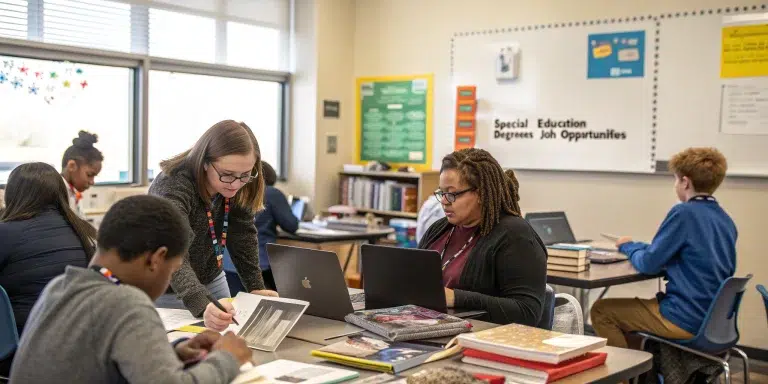
Special Education Degrees: Curriculum & Job Opportunities
Overview of Special Education Degrees
Special education degrees, also known as special needs education, SPED, or exceptional education, equip individuals with the necessary skills and knowledge to teach and support students with disabilities ranging from mild to severe. These degrees cater to a diverse range of learners and prepare graduates for various educational settings, including public schools, private institutions, residential facilities, hospitals, and home-based education. With programs available from the associate’s level to doctoral degrees, graduates of special education programs find themselves well-prepared to make a significant impact in the field.
What is Special Education?
Special education focuses on the learning needs of students with disabilities, ensuring they receive equitable instruction tailored to their individual capabilities. The field is governed by federal laws, such as the Individuals with Disabilities Education Act (IDEA), which mandates appropriate educational interventions for students with special needs. Educators in this field are trained to develop specialized lesson plans, implement instructional strategies and adaptations, and facilitate an inclusive classroom environment.
What Do You Study in Special Education?
Students enrolled in special education programs engage in a curriculum designed to foster a deep understanding of the unique challenges faced by students with disabilities. This curriculum generally includes foundational knowledge, teaching techniques, legislative frameworks, and hands-on learning experiences.
Core Subjects
- Foundations of Special Education: Understanding the history, philosophy, and laws governing special education. Learning about the various types of disabilities and their impact on learning.
- Instructional Methods: Techniques for adapting and developing curricula to meet diverse learning needs. Effective teaching strategies for inclusive classrooms.
- Assessment and Evaluation: Overview of assessment tools and methodologies used in evaluating students with disabilities. Developing Individualized Education Plans (IEPs) and understanding how to document and track student progress.
- Behavior Management Strategies: Techniques for managing classroom behavior and promoting positive interactions. Methods for implementing behavioral interventions tailored to individual needs.
- Collaboration and Communication: Working effectively with families, educators, and other professionals. Strategies for advocating for students’ needs and rights within the educational system.
Elective Courses and Practical Experiences
Special education programs often offer electives that allow students to explore specific areas of interest, such as:
- Inclusion strategies for secondary education
- Augmentative and alternative communication for non-verbal students
- Autism spectrum disorders
Programs typically include comprehensive fieldwork experiences, such as student teaching placements in special education classrooms. These placements are crucial for applying theoretical knowledge in real-world settings and developing practical teaching skills.
Careers After Special Education
Graduates with special education degrees enter a variety of roles within educational institutions and support services. The skills they acquire equip them for positions not only as educators but also in specialized consultancy and administrative roles.
Potential Job Titles
- Special Education Teacher (preschool to high school)
- Instructional Coordinator
- Education Program Specialist
- Educational Diagnostician
- Transition Specialist
- Special Education Consultant
- Behavior Analyst
- Resource Teacher
Employment Industries
- Public and private schools
- Residential facilities
- Hospitals and outpatient programs
- Nonprofit organizations focused on disability advocacy
- Educational consulting firms
Salary Ranges
As of recent data, the average salaries for individuals with special education degrees vary by position and region. Here are some averages:
- Special Education Teacher: $50,000 – $70,000 USD / €45,000 – €63,000
- Instructional Coordinator: $60,000 – $80,000 USD / €54,000 – €72,000
- Educational Diagnostician: $70,000 – $90,000 USD / €63,000 – €81,000
- Behavior Analyst: $55,000 – $85,000 USD / €50,000 – €75,000
Is Special Education Hard to Study?
Studying special education presents unique challenges that require dedication and resilience. Potential difficulties may include:
- Emotional Challenges: Working with students who have diverse needs can be emotionally taxing. Educators must develop resilience and coping strategies.
- Complex Learning Needs: Understanding the varied disabilities and creating effective IEPs can be daunting. This requires strong analytical skills and knowledge retention.
- Regulatory Compliance: Navigating federal and state regulations regarding special education can be complex and demanding.
Required Skills
- Strong interpersonal and communication skills
- Patience and empathy
- Ability to think creatively for problem-solving
- Organizational skills to manage documentation and planning
Preparation Tips
- Engage in volunteer opportunities with individuals with disabilities to gain firsthand experience.
- Participate in workshops and training sessions focused on effective teaching strategies in special education.
- Stay informed about legislative changes in the field to remain an effective advocate for students.
Top Certifications After Special Education Graduation
After earning a degree in special education, graduates may consider pursuing additional certifications to enhance their expertise and professional marketability. Essential licenses and certifications include:
- Teaching Certification: Required in most states for special education teachers.
- Board Certification in Special Education (BSE): A credential indicating advanced knowledge in special education practices.
- Nationally Certified School Psychologist (NCSP): For those interested in the psychological aspects of special education.
- Behavior Analyst Certification Board (BACB): Certification for those focusing on behavioral interventions.
Obtaining these certifications can lead to greater job opportunities and increased earning potential.
Where to Study Special Education
Students interested in pursuing a degree in special education will find several reputable programs in Turkiye. Here are some universities offering excellent special education degrees:
Conclusion
In summary, special education degrees prepare graduates for meaningful careers dedicated to enhancing the educational experiences of students with disabilities. Focusing on an inclusive, supportive, and effective learning environment, these programs equip educators with the tools necessary to foster positive academic outcomes. Whether you are beginning your educational journey or looking to specialize further, special education holds opportunities to impact lives significantly.
Reach out to SIT Search for personalized help in finding the right academic program suited to your aspirations and career goals.
Take the Next Step with Study in Turkiye
Explore further and enhance your educational journey:

