
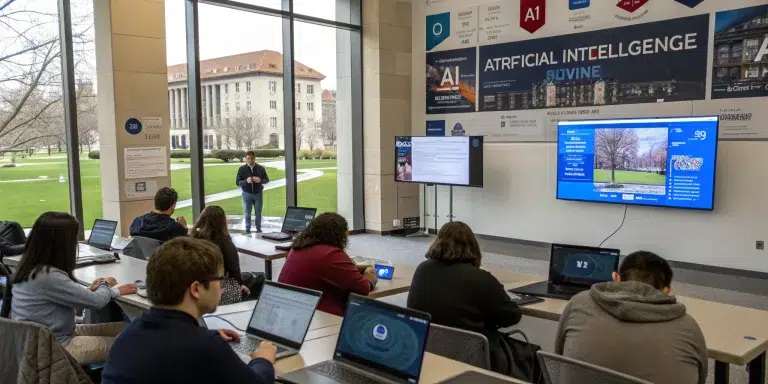
Artificial Intelligence Studies: Courses & Career Prospects
What is Artificial Intelligence Studies?
What Do You Study in Artificial Intelligence Studies?
Careers After Artificial Intelligence Studies
Is Artificial Intelligence Hard to Study?
Top Certifications After Artificial Intelligence Graduation
Where to Study Artificial Intelligence Studies
Program Overview
Academic programs in Artificial Intelligence (AI) offer structured curricula designed to provide strong foundational knowledge alongside specialized, advanced skills relevant to the rapidly evolving AI field. These programs cater to a diverse group of students, including those seeking careers in technology, research, and interdisciplinary fields that incorporate AI. The coursework is designed to equip students with skills necessary for both practical application and theoretical understanding of AI.
What is Artificial Intelligence Studies?
Artificial Intelligence Studies combines elements of computer science, mathematics, and cognitive science aimed at creating systems capable of performing tasks that would typically require human intelligence. This includes understanding natural language, recognizing patterns, making decisions, and solving complex problems. AI is becoming increasingly vital in various sectors, including healthcare, finance, transportation, and entertainment, making it a sought-after field of study.
The curriculum within AI studies is carefully crafted to develop both technical expertise and innovative thinking. Programs may offer a range of undergraduate, graduate, and certificate courses, tailoring the depth and breadth of education to students’ career goals and interests.
What Do You Study in Artificial Intelligence Studies?
Core Areas of Study
Students in AI programs will encounter several key areas within their studies:
- Programming and Computer Science: Foundational courses introduce students to programming languages (e.g., Python, Java), software engineering, and algorithm development essential for coding AI applications.
- Mathematics and Statistics: Courses focus on topics like linear algebra, calculus, probability, and statistics, which are crucial for understanding algorithms and data analysis in AI.
- Machine Learning & Deep Learning: These classes delve into the creation and implementation of algorithms that enable machines to learn from and make predictions based on data.
- Natural Language Processing (NLP): Students learn how to design systems that understand, interpret, and generate human language, covering concepts such as text classification and sentiment analysis.
- Computer Vision and Image Processing: This area teaches the processing and analysis of visual data, enabling students to work on projects related to image recognition and categorization.
- Robotics and Automation: Courses include design and operation of robotic systems, focusing on how machines can perform tasks autonomously or semi-autonomously.
- Knowledge Engineering & Software Robotics: Elective tracks provide deeper insights into how AI systems can reason and interact intelligently with environments.
Typical Curricula
Here’s a breakdown of the coursework you may encounter during an AI program:
- Introductory Programming and Computer Science: Basics of algorithm design, data structures, and programming techniques.
- Advanced Courses: Following is a list that may represent the core of Advanced Classes within the curriculum:
- Natural Language Processing (NLP)
- Artificial Intelligence and Deep Learning
- Knowledge Engineering
- Computer Vision
- Software Robotics
Learning Outcomes
Graduates of AI programs are trained to:
- Build machine learning and deep learning models.
- Apply NLP techniques across various applications.
- Process and analyze image and visual data.
- Develop automated systems and robotics solutions.
- Utilize advanced AI approaches to solve real-world problems.
Careers After Artificial Intelligence Studies
Graduates who hold a degree in Artificial Intelligence are equipped to pursue various career paths across many industries. The demand for AI professionals is high, and job opportunities continue to grow as technology evolves.
Career Opportunities
Typical career paths for alumni may include:
- Machine Learning Engineer
- Data Scientist
- AI Research Scientist
- Robotics Engineer
- Computer Vision Specialist
- Natural Language Processing Engineer
- Software Developer (with an AI focus)
- Knowledge Engineer
Salary Expectations
The average salary ranges for these positions can vary significantly depending on experience, location, and sector. Here are some approximations:
- Machine Learning Engineer: $112,806 (USD) / €106,000 (EUR)
- Data Scientist: $117,212 (USD) / €110,300 (EUR)
- AI Research Scientist: $137,000 (USD) / €130,000 (EUR)
- Robotics Engineer: $87,660 (USD) / €82,000 (EUR)
- NLP Engineer: $115,000 (USD) / €109,000 (EUR)
Is Artificial Intelligence Hard to Study?
Like any advanced field of study, pursuing a degree in Artificial Intelligence comes with its challenges. The rigorous curriculum, demanding projects, and rapidly evolving technology can be daunting for some students.
Common Challenges
- Technical Complexity: Many foundational subjects such as math, programming, and statistics require strong analytical skills.
- Keeping Up with Technology: AI is an ever-evolving field; students must continually seek to learn and adapt to new tools and techniques.
- Project Work: Practical applications often involve extensive teamwork and time management skills as students complete various projects.
Required Skills
To excel in AI studies, students should aim to develop the following skills:
- Strong problem-solving capabilities
- Proficiency in programming languages (particularly Python)
- Analytical thinking and data interpretation
- A foundational understanding of mathematical concepts
Preparation Tips
- Brush Up on Math: Take time to strengthen your skills in algebra, statistics, and calculus.
- Learn Programming Basics: Familiarize yourself with Python or another programming language before starting the program.
- Study Analytical Thinking: Engage in activities that improve your critical thinking abilities to better address complex problems.
Top Certifications After Artificial Intelligence Graduation
After completing an AI program, there are several certifications that may enhance your qualifications and employability in the workforce. Important certifications may include:
- Certified Artificial Intelligence Practitioner (CAIP): Focuses on practical skills and applications.
- Microsoft Certified: Azure AI Fundamentals: Validates knowledge of core AI concepts and Azure AI services.
- IBM AI Engineering Professional Certificate: Concentrates on building AI models and deploying machine learning algorithms.
These certifications can strengthen your resume and demonstrate your commitment and expertise in the AI field.
Where to Study Artificial Intelligence Studies
Several universities offer robust programs in Artificial Intelligence. If you are considering studying this growing field, here are some options to explore:
Additional Recommendations
If you are interested in pursuing a career in Artificial Intelligence, consider reaching out to these universities for more detailed information about their programs.
Take the Next Step with Study in Turkiye
Explore further opportunities in Artificial Intelligence studies and find the right academic program for you with Study in Turkiye, the trusted authority guiding international students.

